
India successfully test-fired the 'Agni 5' intermediate range ballistic missile, capable of reaching targets up to 5,000 km, validating its operational and technical parameters.

The fragile ceasefire in West Asia between the US and Iran to halt the hostilities in the region for two weeks faces renewed uncertainty as Tehran reportedly moved to block the strategic Strait of Hormuz once again due to Israel's intensified offensive against Hezbollah in Lebanon, according to Iranian state media Islamic Republic News Agency (IRNA), which US President Trump says was "not included" as part of the ceasefire deal.

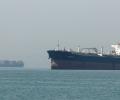
The American warship stopped the tanker "after it attempted to sail to an Iranian port," according to a statement released by CENTCOM.

To get its act going in Myanmar, India would need very dynamic diplomacy and not the lazy all-eggs-in-one-basket approach, points out Subir Bhaumik.

The Iranian military on Thursday issued a strongly worded response to remarks made by United States President Donald Trump, warning that the ongoing conflict will persist until Washington, DC faces what it described as 'permanent humiliation, regret, and surrender', as reported by Iranian state media Press TV.

Iranian military spokesperson said that stability in the region would be ensured only by the strength of Iran's armed forces and warned that energy and oil markets would not return to previous levels unless this reality was acknowledged.

'In a volatile global market, India is pursuing a low-risk, low-return policy, akin to a SIP -- slow, steady investment.' 'Pakistan is following a high-risk, high-return policy.'
Pakistan's Interior Minister Mohsin Naqvi has been in Tehran meeting with Iranian officials in an attempt to mediate and resolve the ongoing conflict between the US and Iran. This marks Naqvi's second visit in less than a week as Pakistan seeks to bridge the differences between the two nations and establish long-term stability in the region.

TARA is India's first indigenous modular glide weapon, capable of transforming conventional unguided warheads into long-range precision-guided weapons.

According to the Pentagon, the vessels were targeted as part of efforts to prevent the deployment of naval mines in the strategically vital passage through which a significant portion of global crude oil shipments transits.

Iran has launched a fresh wave of missile attacks against Israeli and United States-linked targets as the Islamic Revolutionary Guard Corps (IRGC) said it fired some of its heaviest missiles in the latest phase of its retaliatory campaign, while Israel Defence Forces alleged that many of the projectiles carried cluster bomb warheads.

Troops of the Indian Army's Southern Command showcased their operational preparedness and integrated combat capabilities during Exercise Agni Varsha at the Pokhran Field Firing Ranges in Rajasthan.

Lovlina Borgohain and Sakshi Chaudhary secured their spots for the Commonwealth Games and Asian Games after winning their respective selection trials.

The US blockade on Iranian ports is aimed to curb Iranian energy exports, thereby crippling its economy to force Iran back to the negotiating table, points out Commodore Venugopal Menon (retd).

SC Delhi defeated NorthEast United FC 3-0 in an Indian Super League match, with Joseph Sunny scoring twice. The win moves SC Delhi up the standings.

As Iran heads into crucial peace talks with the United States of America, here are the six men who decide the Islamic Republic's course.

United States President Donald Trump on Friday signalled the US intention of going all out in its campaign against Iran's Islamic regime, warning Iran to watch out for what would happen today and saying that the US was winning the conflict despite what reports claimed.
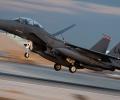
The military command clarified in a statement published on X that the aircraft were engaged in error during active combat operations on Sunday.
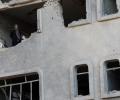
A spokesperson for the Central Khatam al-Anbiya Headquarters said that Iran's armed forces are prepared to intensify their response if aggression continues.

The Israeli Air Force (IAF) said it struck several targets in Tehran, Shiraz and Ahvaz simultaneously over the past 24 hours, targeting sites linked to Iran's ballistic missile programme, air defence systems and military headquarters.

According to Iranian state media, Islamic Republic of Iran Broadcasting (IRIB), the threat was articulated by Ebrahim Zolfaghari, spokesperson for Iran's Khatam al-Anbiya Central Headquarters.
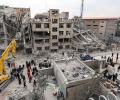
The call came before Iran's new supreme leader Mojtaba Khamenei vowed vengeance and urged citizens to continue their fight against the attacks by US and Israel.

In a clear message to international observers, the strategic site was pointedly "described as "the tip of the iceberg" regarding the nation's hidden arsenal.

The Islamic Revolutionary Guard Corps (IRGC) has declared the commencement of its 27th offensive under Operation True Promise 4, targeting American and Israeli positions in response to what it termed a new wave of 'unprovoked US-Israeli aggression against the Islamic Republic', Iranian state broadcaster Press TV reported.

If current trends persist, the Congress risks becoming increasingly regionally concentrated, dependent on a handful of states rather than functioning as a truly pan-India political force.

An Iranian missile strike on Haifa has resulted in casualties and intensified conflict between Iran and Israel, prompting search operations and ceasefire discussions.

'Pakistan's is the only military-controlled nuclear weapons programme in the world.' 'As people get radicalised, the risk of a brigadier or pilot taking matters into their own hands is a real concern.'

Iran has issued a defiant response to United States President Donald Trump's claims regarding the conclusion of hostilities, asserting that it alone will 'determine' the end of military actions against American and Israel targets.

For the first time, an Army General is set to take over command of the country's strategic forces and nuclear arsenal. Lt-Gen Balraj Singh Nagal will take over command of the country's strategic forces and nuclear arsenal, an official announcement said.
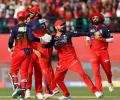
Venkatesh Iyer's explosive innings of 73 not out off 40 balls propelled Royal Challengers Bengaluru to a formidable 222 for four against Punjab Kings in their IPL match. Virat Kohli and Devdutt Padikkal also made significant contributions.

IRGC said vessels seeking to sail through the strategically critical Strait of Hormuz must obtain Iran's approval; otherwise, they could become targets of Iranian attacks.

The purge in Washington does not pause the war. Strikes continue, Hormuz remains closed, and Brent crude is still dancing around $109 a barrel. For India, the command chaos in the Pentagon is another layer of uncertainty piled on five weeks of conflict that was already straining every buffer Delhi has.

India on Monday successfully test-fired its indigenously built nuclear-capable intermediate range Agni-I ballistic missile, capable of hitting a target 700 km away, from a test range off Odisha coast as part of a user trial by the Army.

Inducted into India's SFC in 2003, Prithvi II, the first missile to be developed by DRDO under India's prestigious Integrated Guided Missile Development Programme is now a proven technology

In the Indo-Pacific's new era -- where perception shapes reality faster than treaties -- the real entrapment is not of China or the United States. It is the test Japan has set for itself -- and whether partners like India, acting as balancers rather than accelerants, can help ensure that the story ends in stability, points out Varun Arya.

Nobody takes Pakistan seriously and therefore Pakistan's sudden mediating with almost immediate results of a ceasefire seems more contrived than real, points out Vice Admiral Biswajit Dasgupta (retd).

The 'rescue' operation occurred within kilometres of Iran's underground tunnel complex at Isfahan, assessed by the IAEA and US intelligence as holding a substantial portion of the country's 60 per cent enriched uranium stockpile. Retired senior US military officers have highlighted that the mission's footprint -- hundreds of special operators, multiple heavy-lift aircraft deep inside Iran -- appears outsized for recovering a single airman. Prem Panicker continues his must read blog on the Iran War.

Trump may strike. He may announce productive talks and extend again. He may do both at the same time. Iran will not open the Strait on someone else's terms, so no matter what happens, that problem will remain unsolved. And the IRGC will still be collecting its $2 million toll from every ship bold enough to ask permission to pass.

The Army paid a solemn tribute to Fazal, who died on Thursday after a brief illness. They remembered him as a "valiant son of the soil" who stood shoulder to shoulder with troops during Operation Sarp Vinash, which successfully dismantled terrorists' operational hub in Hill Kaka.
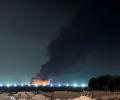
The IRGC said the barrage targeted several US military facilities in the region, including bases at Sheikh Isa in Bahrain, Juffair in Bahrain, Ali al-Salem in Kuwait and Al Azraq in Jordan.
